BU vs Boston College 2025-2026: Rankings, Costs, Rivalry & Which to Choose
Data-driven BU vs BC comparison: BU #42 vs BC #36 US News, acceptance rates ~12.6-12.8%, Beanpot rivalry (BU 32 titles), financial aid, academics, campus life, and post-grad outcomes.BU and BC are closer than most people think -- nearly identical acceptance rates (~12.6-12.8%), similar sticker prices (~$91-94K), and both meet 100% of demonstrated financial need. The real differences: BU is a large secular research university (17,744 undergrads, 17 schools, 300+ majors) on an urban campus along Comm Ave.
In This Guide
- 1The Quick Answer
- 2Rankings: It Depends What You're Measuring
- 3Admissions: Nearly Identical Selectivity
- 4What You'll Actually Pay: Financial Aid Comparison
- 5Academics: Where Each School Wins
- 6Campus & Location: City vs. Suburb
- 7The Rivalry: Beanpot, Fenway Park & 100+ Years of Hockey
- 8Social Life: Greek Life, Diversity & Campus Culture
- 9After Graduation: Salary, Careers & Grad School
- 10Who Should Choose Which?
- ?Frequently Asked Questions
The Quick Answer
Rankings: It Depends What You're Measuring
There's no single answer to "which ranks higher" because it depends on the ranking system:
| Ranking System | Boston University | Boston College |
|---|---|---|
| US News National (2026) | #42 | #36 |
| Forbes (2025-2026) | #45 | #54 |
| Niche Best Colleges (2026) | #38 | #45 |
| Wall Street Journal (2025) | #171 | #100 |
| QS World (2026) | #88 | Not top tier |
| Time Magazine World (2026) | #41 (ahead of Brown, Dartmouth) | Not listed |
The pattern: BC wins in US News (#36 vs #42) and WSJ. BU wins in Forbes (#45 vs #54), Niche (#38 vs #45), and every global ranking. BU's QS World ranking of #88 places it among the top 100 universities globally -- BC doesn't crack that list.
BC also ranks #6 nationally for "Commitment to Undergraduate Teaching" and #5 for "Best First-Year Experience." BU ranks #16 among private institutions for research expenditure ($579.5 million).
The bottom line: if you care about global research reputation, BU ranks higher. If you care about the US News domestic ranking and undergraduate experience, BC edges ahead.
Admissions: Nearly Identical Selectivity
Despite the rivalry, BU and BC admit students at virtually the same rate:
| Metric | Boston University | Boston College |
|---|---|---|
| Acceptance Rate (Class of 2029) | 12.83% | 12.6% (record low) |
| Total Applications | 76,779 | 39,681 |
| Average SAT | 1,466 | 1,503 |
| Average ACT | 32 | 34 |
| Top 10% of HS Class | 86% | 95% |
| Test Score Submitters | 45% | 74% |
| First-Generation Students | 20% | 12% |
What stands out: BC's admitted students have slightly higher test scores (1503 vs 1466 SAT) and more come from the top 10% of their class (95% vs 86%). But BU gets nearly double the applications (76,779 vs 39,681) and enrolls significantly more first-generation students (20% vs 12%).
Both schools are test-optional. The big difference: 74% of BC applicants submit test scores vs. only 45% at BU. This suggests BC attracts more students with strong test scores, while BU sees more students taking advantage of test-optional policies.
BU fills ~59% of its class through Early Decision. BC fills ~31% through ED I. Both offer a significant admissions advantage for ED applicants.
What You'll Actually Pay: Financial Aid Comparison
The sticker prices are similar, but BU ends up cheaper for most families:
| Cost Component | Boston University | Boston College |
|---|---|---|
| Tuition | $69,870 | $72,180 |
| Housing | $12,790 | $10,940 |
| Meal Plan | $7,180 | $7,344 |
| Total COA | ~$94,427 | ~$91,792 |
| Average Net Price | $27,551 | $32,590 |
| Total Aid Budget | $473 million | $190 million |
The real story is net price. BU's average net price is roughly $5,000 less than BC's per year -- that's $20,000 over four years. BU's total financial aid budget ($473 million) is more than double BC's ($190 million), partly because BU is twice the size but also because BU distributes more generously.
Starting with the Class of 2031, BU's new BU Promise eliminates loans entirely from first-year need-based aid packages. Families earning under $75,000 with typical assets pay $0 for tuition, housing, and meals. Families under $200,000 have parent contributions capped at $20,000.
BC also meets 100% of demonstrated need but still includes loans (up to $3,500) and work-study ($3,000) in aid packages. BC ranks #54 on US News "Best Value" list.
Bottom line: Both schools are generous, but BU is measurably more affordable for most families. Run the net price calculators at both schools with your family's actual numbers.
Academics: Where Each School Wins
These schools have genuinely different academic strengths:
Where BU is clearly stronger:
- Engineering -- BU has an entire College of Engineering; BC has no engineering school
- Computer Science -- BU #45 nationally; BC #98
- Communications/Journalism -- BU's College of Communication is among the best nationally
- Public Health -- BU School of Public Health ranked #7 nationally
- Occupational Therapy -- #1 nationally (4th consecutive year)
- Law -- BU #22 nationally
- Research -- $579.5 million in research awards; #16 among private institutions
- Undergraduate Business -- Carroll School ranked #32, with Finance #6, Accounting #8, Marketing #10
- Nursing -- Connell School ranked #13 nationally
- Education -- Lynch School is highly regarded
- Study Abroad -- #17 nationally, ~45% participation rate
- Undergraduate Teaching -- Ranked #6 for "Commitment to Undergraduate Teaching"
The Jesuit core: BC requires all students to take 2 theology courses and 2 philosophy courses as part of its 15-course Core Curriculum. These aren't catechism classes -- options include "Buddhism and Christianity in Dialogue" and "Islam and Christianity in Dialogue." But if mandatory theology courses aren't for you, this matters. BU has no theology or philosophy requirements.
Campus & Location: City vs. Suburb
This is often the deciding factor for students who visit both:
Boston University -- Urban Linear Campus
- 1.5 miles along Commonwealth Avenue, ~140 acres
- No clear boundary between campus and city -- BU IS the city
- Multiple Green Line B Branch stops (BU East, BU Central, Amory Street)
- 20-25 minutes to downtown Boston on the T
- BU Beach along the Charles River is the main green space
- Center for Computing and Data Sciences is the signature new building (100% fossil fuel-free)
- ~340 acres in Chestnut Hill, Newton -- 6 miles west of downtown
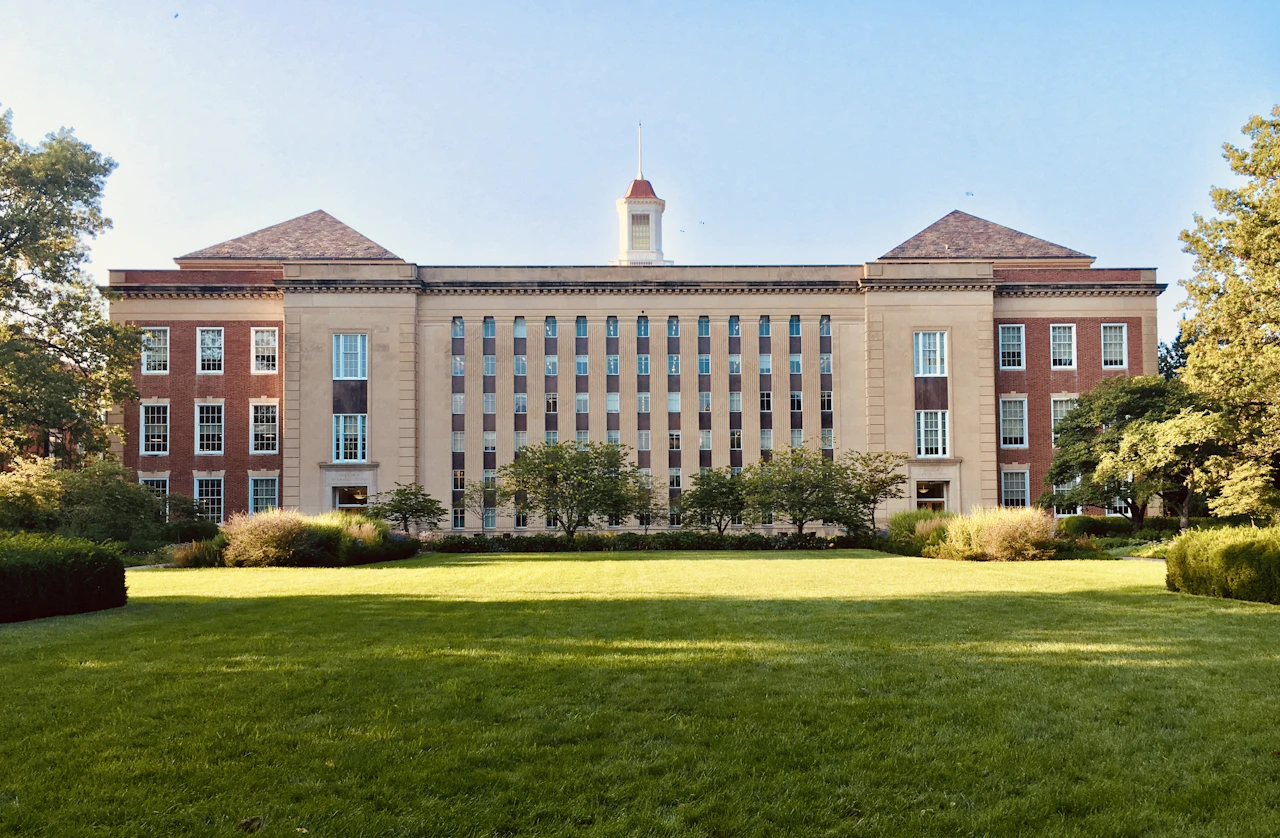
- Unified Gothic architecture designed by Charles Donagh Maginnis; Gasson Hall's 200-foot bell tower is iconic
- Terminus of the Green Line B Branch at Boston College station
- 45 minutes to downtown Boston on the T
- 85% of undergrads live on campus; most can live on campus all 4 years
As one student forum comparison put it: "At BU everyone is anonymous and everyone is a number. At BC NO ONE is anonymous. At BC it doesn't take long until you seemingly know everyone you see around campus. BC feels very much like family. BU feels very much open and flowing."
The Rivalry: Beanpot, Fenway Park & 100+ Years of Hockey
The BU-BC rivalry is one of the greatest in college sports, and hockey is where it lives.
The Beanpot Tournament (since 1952-53):
All-time titles: BU 32 | BC 20 | Harvard 11 | Northeastern 9
BU owns the Beanpot. No other school comes close.
All-Time Head-to-Head Hockey Record:
BU leads 140-134-21 -- separated by just 6 games over 100+ years. The series dates to February 6, 1918, when BU played its first-ever hockey game -- a 3-1 loss to BC at the Boston Arena.
The Fenway Park Game (January 8, 2010):
The first men's college hockey game at Fenway Park. BU edged BC 3-2 in front of 38,000 fans -- the largest crowd to ever watch the two schools play. This is one of the great moments in college hockey history.
2025 Beanpot Championship:
No. 9 BU upset No. 1 BC 4-1 at TD Garden in front of 18,258 fans. BU scored 4 unanswered goals after BC took a 1-0 lead -- weeks after BC had swept BU in a home-and-home series.
Beyond Hockey:
BC plays football in the ACC (Power Four conference) -- national TV, major opponents, 44,500-seat Alumni Stadium. BU plays in the Patriot League (FCS) with no football scholarships. If you want big-time college football game days, BC wins by default. But BU's hockey culture at Agganis Arena -- the "Dog Pound" student section with "SIEVE" signs and "BIG UGLY GOALIE" chants -- is legendary in its own right.
After Graduation: Salary, Careers & Grad School
Both schools produce strong outcomes, but the trajectories differ:
| Metric | Boston University | Boston College |
|---|---|---|
| Placement Rate | 98% within 6 months | 96% employed/grad school |
| Mean Starting Salary | $66,872 | Not published overall |
| Median Salary 10 Years Out | $72,000 | $90,900 |
| Graduation Rate | 90% | 91% |
| Research Expenditures | $579.5M | $79M |
The salary gap at 10 years is real. BC graduates earn significantly more a decade out ($90,900 vs $72,000 median). This is largely driven by BC's pipeline to Wall Street and financial services -- top employers include PwC, Deloitte, Citi, JPMorgan, Barclays, Morgan Stanley, and UBS.
BU's strength is breadth. Graduates spread across medicine, communications, engineering, public health, law, and tech. BU's medical school, dental school, and law school create direct professional pipelines.
For pre-med: Both schools feed into Boston's world-class hospitals. BU has its own medical school and proximity to Boston Medical Center. BC has strong pre-med advising and places well into medical schools, but has no affiliated medical school of its own.
Who Should Choose Which?
- Want an urban campus integrated into Boston with no boundary between campus and city
- Care about diversity (Niche A+ rating, 20% international, 20% first-gen)
- Want engineering, public health, communications, computer science, or 300+ major options
- Prefer a secular institution with no religious course requirements
- Want Greek life as an option (small but present)
- Live for hockey culture and the Beanpot
- Want a lower net price (~$5,000/year less) and no loans in first-year aid
- Want a traditional, beautiful Gothic campus with a tight-knit community
- Prefer a smaller school where "everyone knows everyone" (9,677 vs 17,744 undergrads)
- Want top-tier undergraduate business (Carroll School Finance #6 nationally)
- Are interested in the Jesuit intellectual tradition (even if you're not Catholic)
- Want higher long-term earning potential ($90,900 median salary at 10 years)
- Want to study abroad (~45% participation, ranked #17 nationally)
- Want Power Four football game days in the ACC
- Want to live on campus all 4 years (85% live on campus)
Frequently Asked Questions
Is BU or BC more prestigious?
Is BU or BC harder to get into?
Is BU or BC cheaper?
Does BC require theology courses?
Who wins the BU vs BC hockey rivalry?
Does BC have Greek life?
Which school is more diverse, BU or BC?
Do BC grads earn more than BU grads?
Related Guides
You Might Also Like
Get More BU Tips
Join 5,000+ students getting weekly insider tips and campus updates.
Social Life: Greek Life, Diversity & Campus Culture
The social scenes are fundamentally different:
Greek Life:
- BU: 12 fraternities, 12 sororities, ~7-10% participation, non-residential (no Greek housing)
- BC: Greek life is banned. BC explicitly prohibits fraternities and sororities. Former Dean: "The inherently exclusive nature of Greek life means that it is unlikely that the University will ever officially recognize fraternities and sororities." BC students sometimes travel to BU for fraternity parties.
Diversity:- BU: 43% White, 20% international, Niche diversity grade A+
- BC: 62% White, 6% international, Niche diversity grade A-
- BU enrolls 20% Pell Grant recipients and 20% first-generation students
Religious Identity:- BU: Secular. No religious requirements or institutional religious identity.
- BC: Jesuit Catholic. ~2/3 of students are Catholic. Required courses in theology and philosophy. Insurance does not cover birth control. Graduation includes religious ceremonies. However, 21 religious student groups span all faiths, and non-Catholic students consistently report feeling welcome.
The social scene:BC social life centers on dorm parties, campus events, and off-campus house parties. BU's social life spreads across Greek events, 450+ student organizations, and Boston itself. BC students describe a tight-knit community where "everyone knows everyone." BU students describe navigating a larger, more diverse social landscape with more independence.